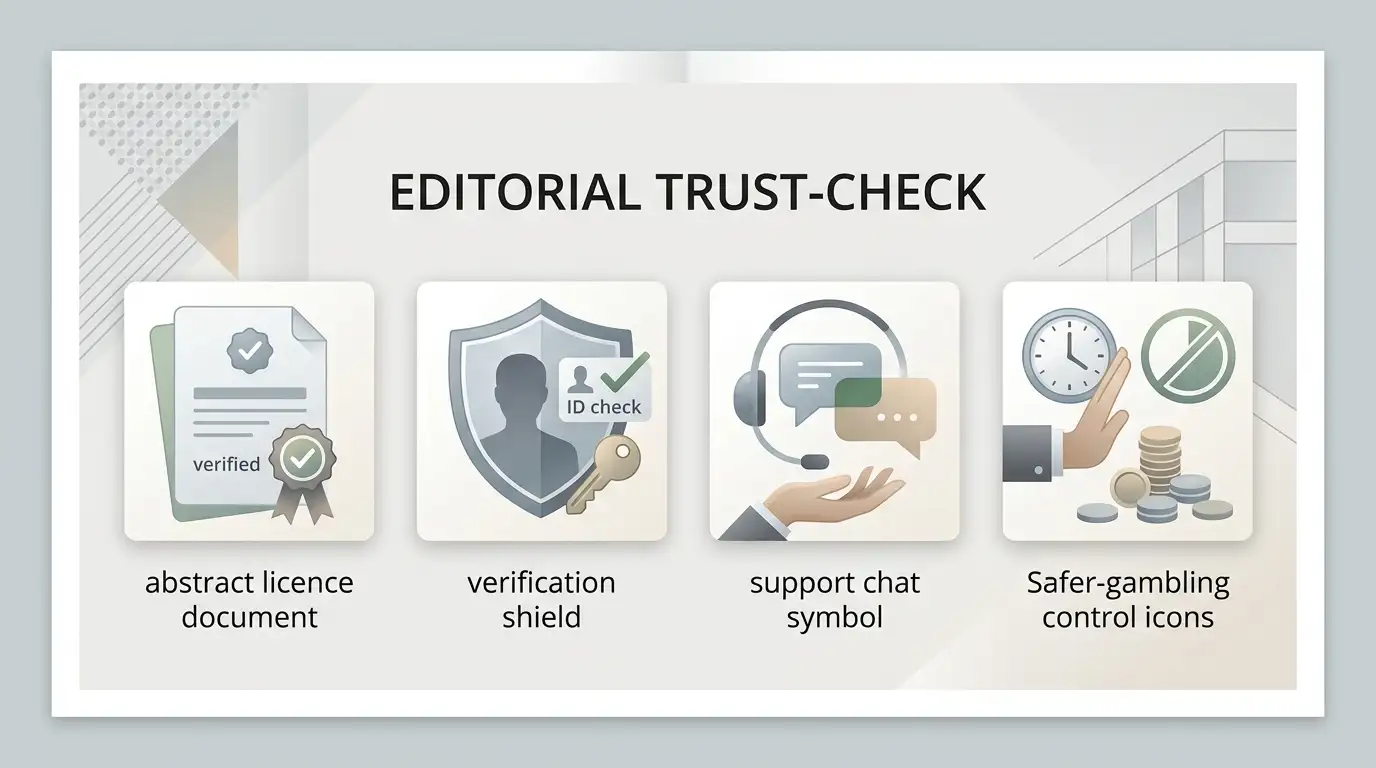
Nika Casino UK Guide
Nika Casino and GAMSTOP: What UK Players Should Know
 Available in GB
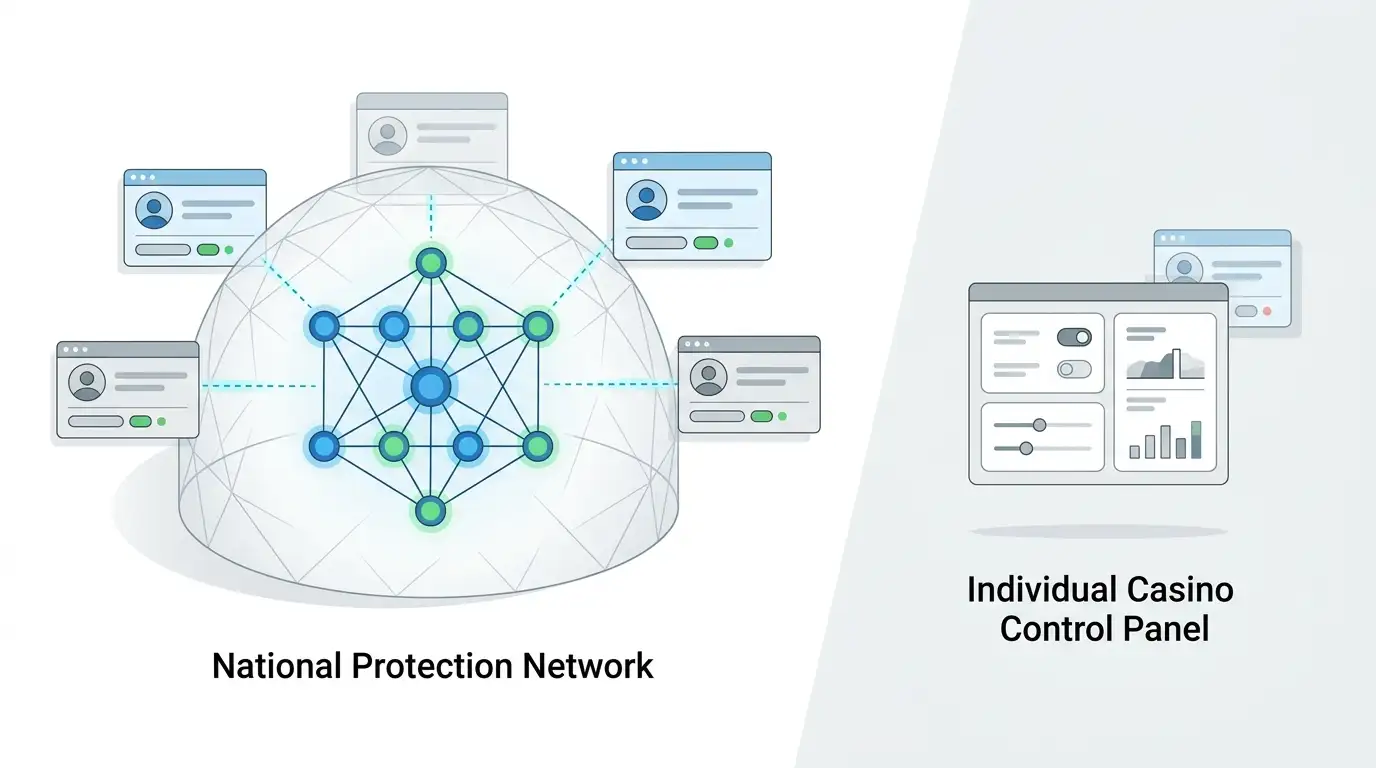
GAMSTOP coverage has not been verified for Nika Casino. GAMSTOP states that all online gambling companies licensed in Great Britain must be part of the national online self-exclusion scheme. No UKGC licence has been verified for Nika Casino or its operator, Torus Solutions SRL. Nika does provide its own safer-gambling controls, including self-exclusion, deposit limits and loss limits, but those site-level tools are not the same thing as GAMSTOP. For a UK reader, that distinction matters more than the marketing label “non-GAMSTOP casino”: a national multi-operator exclusion and an individual casino’s account controls have different scope, different oversight and different practical effects.
How GAMSTOP works in Great Britain
GAMSTOP is the national online self-exclusion scheme for people in the UK. Its public guidance says that when a person registers, participating gambling operators check the GAMSTOP register when someone tries to sign up for or use an online gambling account. If the person is registered, the operator blocks access in line with the scheme.
The regulatory link is important. GAMSTOP’s current guidance says all online gambling companies licensed in Great Britain must be part of GAMSTOP. Its Terms explain that, since 31 March 2020, participation has been a condition of the Gambling Commission licence for the relevant remote gambling operators. The UK Gambling Commission’s own remote multi-operator self-exclusion condition likewise requires licensees in scope to participate in the national scheme.
This means GAMSTOP coverage is not just an optional feature that a Great Britain-licensed online casino can add or remove like a payment method. It is connected to the operator’s UK licensing obligations. Check UKGC status before treating a casino as covered by GAMSTOP. A logo, a phrase such as “responsible gaming,” or a local account-exclusion button is not enough to establish participation.
GAMSTOP also explains the practical scope of the service: it blocks users from signing up for or using online accounts with gambling companies licensed in Great Britain. The service is designed around participating operators rather than around every gambling website accessible on the internet. That boundary is central to understanding what the scheme can and cannot do.
Nika and the UKGC register
No UK Gambling Commission licence is identified for Nika Casino or Torus Solutions SRL in the UKGC public register. Separately, Nika’s current terms identify an Anjouan licence rather than a UKGC licence. The Licence and UKGC Status explains those regulatory records in detail.
Because UKGC licensing and GAMSTOP participation are linked, the absence of a verified UKGC licence means GAMSTOP coverage should not be assumed for Nika. The current GAMSTOP participating-company list also does not identify Nika Casino or Torus Solutions SRL. Operator names, trading names and licensing arrangements can change, so check the live GAMSTOP list and UKGC register again when participation matters.
It is also important not to turn “not verified as participating” into a recommendation or a workaround. GAMSTOP exists to help people block themselves from online gambling with participating Great Britain-licensed companies. Presenting an operator outside that scheme as an attractive alternative for someone who has self-excluded would undermine the purpose of the protection. The important point is the difference in scope, with official GAMSTOP tools remaining the reference for national self-exclusion.
The same discipline applies to phrases such as “UK casino” or “UK-facing casino.” A site may use English, display familiar payment brands or appear in UK search results without holding a UKGC licence. GAMSTOP participation should be established from the regulatory relationship and current participating-company information, not inferred from design, language or search visibility.
Nika’s own safer-gambling tools
Nika provides site-level self-exclusion, deposit limits and loss limits. These controls can still matter. A deposit limit can restrict how much money is added to the account, while a loss limit can cap losses within the operator’s configured framework. Self-exclusion is the account-level mechanism for stopping access under Nika’s own process.
Those tools operate at a different layer from GAMSTOP. Nika’s self-exclusion concerns the relationship between the player and Nika. GAMSTOP is designed to apply across participating online operators licensed in Great Britain. A person who activates only an account-level exclusion should not assume that it automatically propagates to other gambling companies, just as a GAMSTOP registration should not be assumed to reach organisations that do not participate in the scheme.
For practical use, check the current account controls before depositing and set limits while decisions are still deliberate. Do not rely on a future ability to change limits instantly: responsible-gambling systems often include waiting or cooling-off mechanics, and exact implementation details should be taken from the live operator policy. If identity checks are relevant to account control or withdrawal access, the KYC and Verification explains the current KYC process separately.
Nika’s own responsible-gambling controls should be understood by their actual scope. Saying “Nika has self-exclusion” is not the same statement as saying “Nika is on GAMSTOP.” The first concerns a site-level tool; the second would require verified participation in the national scheme.
What UK players should not confuse
The first distinction is between licensing and accessibility. A website being reachable from a UK internet connection does not establish that it is licensed by the UK Gambling Commission. The UKGC public register is the relevant source for local operator licensing, and no Nika/Torus Solutions SRL entry has been verified.
The second distinction is between local self-exclusion and multi-operator self-exclusion. A casino can provide its own exclusion feature without being part of GAMSTOP. Site-level exclusion can protect the individual account, while GAMSTOP is designed to coordinate exclusion across participating Great Britain-licensed online gambling businesses.
The third distinction is between responsible-gambling tools and the wider UKGC protection framework. Deposit and loss limits can be useful controls, but their presence does not prove UKGC supervision, Alternative Dispute Resolution coverage or any other UK-specific regulatory status. Check each protection at its relevant official source.
The fourth distinction is between information and circumvention. Search terms such as “non-GAMSTOP” are sometimes used by people looking for gambling sites after self-excluding. GAMSTOP is intended to maintain self-exclusion across participating operators. Anyone using GAMSTOP because gambling is causing harm should keep that protection in place and can also use bank gambling blocks, blocking software and specialist support services linked by GAMSTOP.
Saved information can become stale if a licence changes, a business changes trading names or a new operator enters the scheme. Check the current GAMSTOP list when participation matters. For the UKGC side, search both the consumer brand and the legal operator name because a register entry may use the company name rather than the name displayed on a casino homepage.
If the two official checks produce different-looking results, do not fill the gap with assumptions. A UKGC register entry should identify the licensed business, while GAMSTOP’s list identifies participating companies and sometimes their brands. Matching the legal operator, trading name and domain is more reliable than searching one word and stopping at the first similar result. For Nika, no UKGC licence or GAMSTOP participation is identified by those two checks.
For someone already using GAMSTOP, this distinction should reinforce the exclusion rather than create a search for exceptions. GAMSTOP’s own support material recommends additional barriers such as bank gambling blocks and blocking software alongside the national scheme. Those measures can reduce exposure beyond any one operator account and are more consistent with the purpose of self-exclusion than testing whether a particular offshore site can be reached.
How Nika’s own controls differ from UK-wide GAMSTOP protection
Before treating any casino as GAMSTOP-covered, check two official sources: the UK Gambling Commission public register and GAMSTOP’s participating-company list. Nika states an Anjouan licence, while no UKGC licence or GAMSTOP participation is identified for Nika or Torus Solutions SRL in the relevant public records. Treat site-level controls separately from GAMSTOP.
At the same time, Nika’s site-level self-exclusion, deposit limits and loss limits should not be erased from the picture. They are relevant account controls, but they operate within Nika rather than across the national network of participating Great Britain-licensed operators. The Is Safe? Trust Signals for UK Readers places those controls alongside other trust signals such as KYC, support and operator transparency.
A useful final distinction is scope. A Nika account limit or self-exclusion applies to the Nika account, while GAMSTOP is designed to cover participating Great Britain-licensed online gambling businesses across the scheme. If broad multi-operator blocking is the protection you need, confirm participation through GAMSTOP itself rather than treating a casino’s own account controls as an equivalent substitute.
For UK readers, the practical protection checklist is simple: verify the operator in the UKGC register, verify the company in the live GAMSTOP participant list, keep national self-exclusion separate from individual-site controls, and use official support if gambling is becoming difficult to manage. For broader context on payments, games, mobile access and account features, return to the UK Review 2026. The key point is scope: Nika’s own controls and UK-wide GAMSTOP protection are not interchangeable.
Published by the Nika Casino team.